Alicante – what to visit: must-see places for first-time visitors
What’s on this page?
- Alicante – what to visit: must-see places for first-time visitors
- Millennia of history and Alicante tourist attractions: impressive monuments and buildings
- Walking route: cosy, impressive, and unique streets and neighbourhoods of Alicante
- A city where you won’t go hungry: delicious and diverse food, hundreds of unique drinks, and stunning restaurant interiors
- Tips from our team - WTG Spain
- It's just the beginning: entertainment and landmarks near Alicante
Alicante is a city with a millennia-long history, blending ancient traditions with modern development. Its majestic buildings, historic streets, and architectural landmarks reflect the many stages of its evolution and the cultural influences of various eras. Alicante is home to true treasures that will captivate every visitor.
Alicante – what to visit: must-see places for first-time visitors
Looking for Things to Do in Alicante, Spain?
Discover the charm and historical significance of this beautiful Spanish city with our list of Alicante tourist attractions. Trust us - you’ll want to share your experiences of Alicante with your family and friends!
- Castillo de Santa Bárbara
- Concatedral de San Nicolás de Bari
- Basílica de Santa María
- Ayuntamiento de Alicante
- Casa Carbonell
- Barrio de Santa Cruz
- Calle de Las Setas (The Mushroom Street)
- Explanada de España
- Marina Alicante
- Isla de Tabarca
Our team at WTG Spain has created a detailed guide complete with descriptions and locations to ensure you find the best things to do in Alicante. With this guide, you won’t miss a single highlight!
Millennia of history and Alicante tourist attractions: impressive monuments and buildings
Welcome to Alicante, where you’ll discover architectural masterpieces that have witnessed the passage of various eras and civilisations. From ancient castles to stunning cathedrals and basilicas, these landmarks showcase the grandeur and richness of the city’s cultural heritage. They create a unique atmosphere where the past seamlessly blends with the present.
1. Castillo de Santa Bárbara
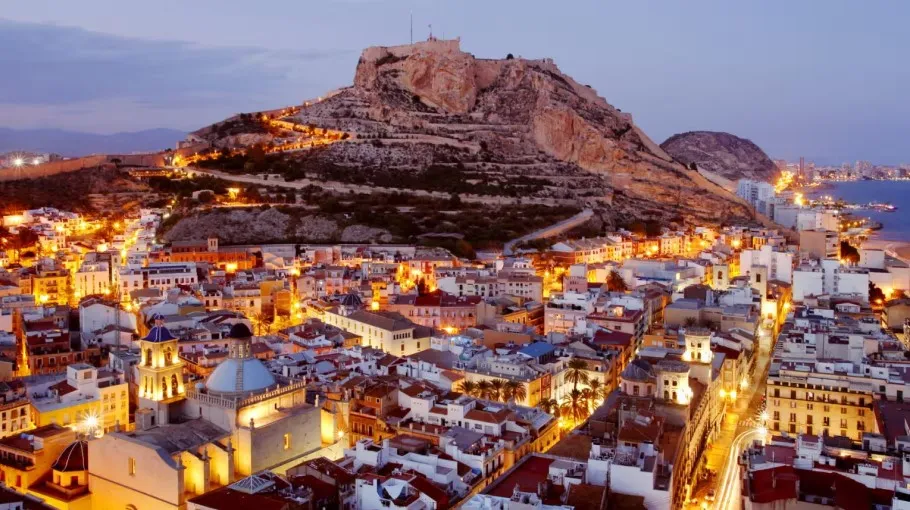
This is one of the largest medieval fortresses in Spain, perched atop Mount Benacantil at an elevation of 166 metres above sea level. Founded by the Moors in the 9th century, its strategic location made it a key defensive stronghold, protecting the city from pirate attacks and invading forces.
Although partially destroyed, Castillo de Santa Bárbara was restored in 1963 and opened to visitors. That same year, two lifts were installed through the mountain, providing convenient access for tourists. From the castle's summit, you can enjoy breathtaking panoramic views of the city.
Interesting Fact: Inside Castillo de Santa Bárbara, there is a hidden room known as La Cara del Moro (The Moorish Face), which is tied to a legend of tragic love. Looking at the mountain where the castle stands, you can see the outline of a Moorish king's face, carved by natural formations. According to the legend, this face symbolises his sorrow after the loss of his daughter, Cantil.
Castillo de Santa Bárbara on Google Maps
Entry: Free
Opening Hours: Daily from 10:00 to 18:00, except Tuesdays
2. Concatedral de San Nicolás de Bari
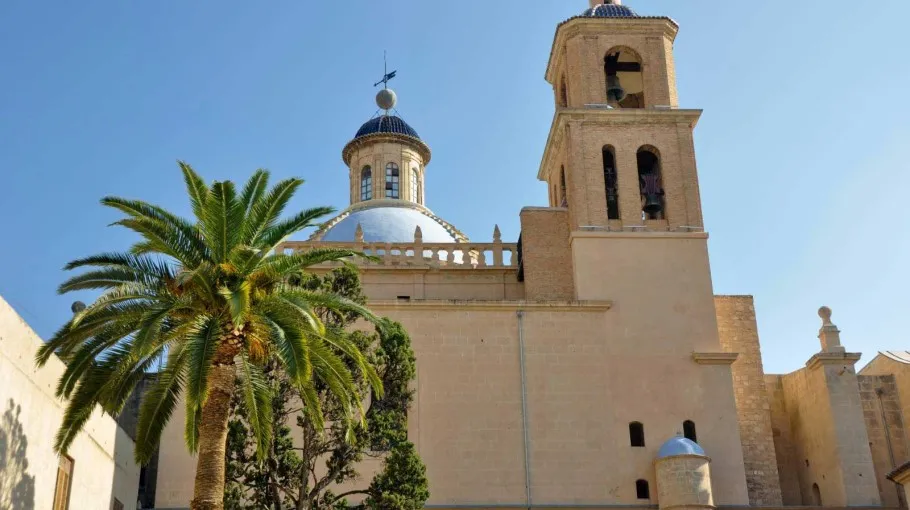
This is one of Alicante’s most significant religious and architectural landmarks. Construction of the co-cathedral began in 1616 and lasted 46 years, completing in 1662. It is dedicated to Saint Nicholas of Bari, the patron saint of Alicante.
The building was constructed in the Spanish Renaissance style (Herreresque), though some elements of the façade feature Baroque details, adding artistic expressiveness. The cathedral's main dome is one of its most striking features, rising to a height of 45 metres and painted in a rich blue to symbolise the sky.
Inside, visitors can admire the main altar adorned with exquisite carved details.
Interesting Fact: Every year on 6th December, the co-cathedral becomes the focal point of celebrations honouring Saint Nicholas. This significant religious and cultural event attracts numerous visitors and pilgrims.
Concatedral de San Nicolás de Bari on Google Maps
Entry: Free
Opening Hours: Open 24/7
3. Basílica de Santa María
This is the oldest religious building in Alicante, with construction beginning in the 14th century on the site of a former mosque from the Moorish period. The basilica is designed in the Catalan Gothic style, evident in its elegant arches, elongated windows, and intricate vaults. However, its main façade, reconstructed in the 18th century, features Baroque elements, including rich decorative details. The main entrance is adorned with a sculptural depiction of the Virgin Mary.
One of the basilica's unique features is its asymmetrical bell towers, built at different times. One dates back to the 15th century, while the other is from a later period. Inside, the basilica impresses with its harmonious design. The main altar is adorned with sculptures and gilded details, while several ancient chapels house religious artworks.
Among the basilica's treasures is its historic organ, crafted in the 18th century, which still plays during services.
Interesting Fact: According to legend, the statue of the Virgin Mary housed in the basilica has helped the city's residents during difficult times, including epidemics. People believed her intercession protected the city and its inhabitants.
Basílica de Santa María on Google Maps
Entry: Free
Opening Hours: Open 24/7
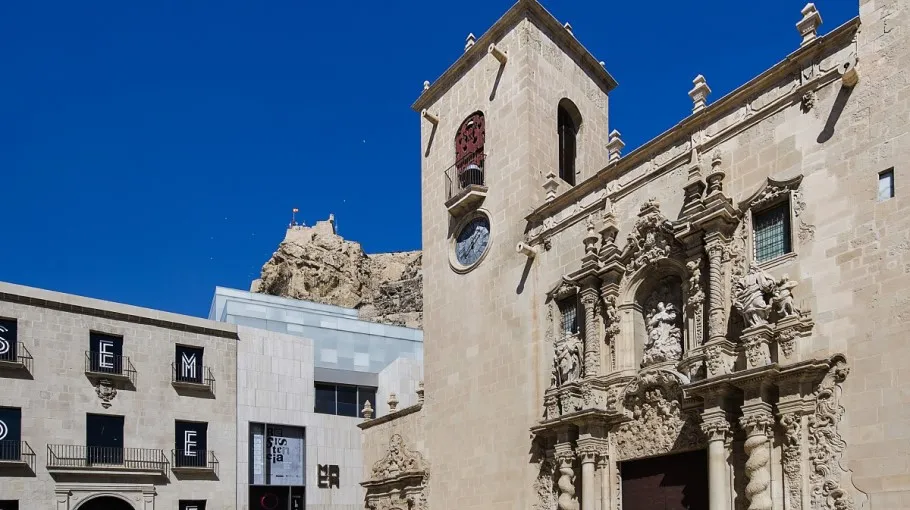
4. Ayuntamiento de Alicante
The Town Hall, built in the 18th century, serves as the official residence of Alicante’s city council. Its façade features grand columns and symmetrical windows, with the entrance highlighted by the city’s coat of arms and elegant stone carvings.
Every 15 minutes, bells from the twin towers of the Town Hall ring out, adding a romantic auditory backdrop to this seaside city.
In addition to administrative functions, the Town Hall hosts exhibitions, concerts, and cultural events. Inside, there is a special room dedicated to royal visits, symbolising the city’s hospitality towards monarchs and distinguished guests visiting Alicante.
Interesting Fact: One of the most intriguing details of the Town Hall is the so-called "Cota Cero" (or Zero Marker). This marker, located near the staircase in the vestibule, serves as the reference point for measuring altitude above sea level across Spain. It is a unique geodetic feature of the country.
Ayuntamiento de Alicante on Google Maps
Entry: Free
Opening Hours: 08:30–17:00, except Saturdays and Sundays
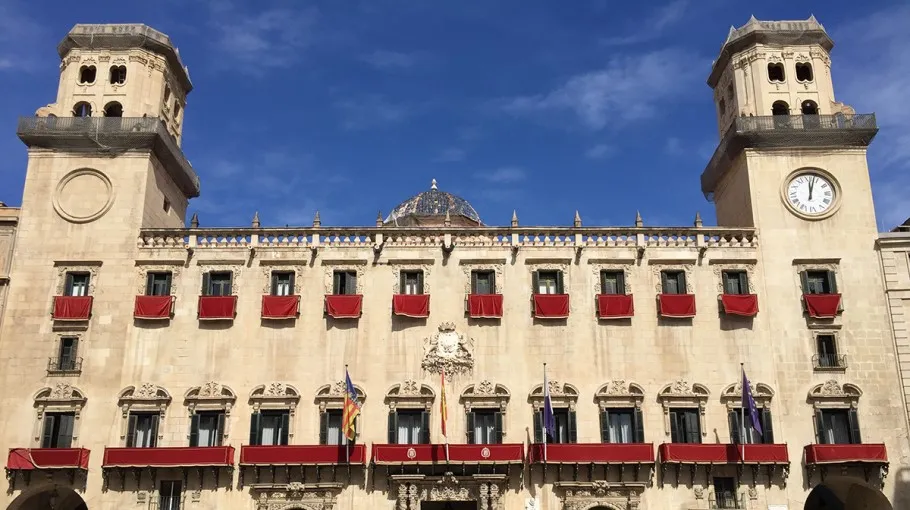
5. Casa Carbonell
Built in 1925 at the request of textile magnate Enrique Carbonell, this building is steeped in local legend. It is said that Carbonell made his fortune during World War I by supplying high-quality fabric to European armies. One popular story suggests that he decided to build the house after being refused entry to a nearby hotel due to his shabby appearance after a long journey. To demonstrate his power and status, he commissioned the construction of a building that would surpass all surrounding structures.
The architecture of Casa Carbonell is an example of eclecticism, blending elements of modernism and French academicism. The building's façade is adorned with exquisite decorative details, arches, balconies, and domes. Today, Casa Carbonell is a private residential building housing apartments, offices, and commercial spaces. Unfortunately, access to the interior of Casa Carbonell is typically closed to tourists, as it is privately owned. However, special events or exhibitions are occasionally held in the commercial spaces, offering a rare opportunity to see at least part of the interior.
Interesting Fact: According to lesser-known stories, during the Spanish Civil War (1936–1939), Casa Carbonell was used as a shelter for diplomats, businessmen, and even spies. Due to its strategic location near the port and its impressive appearance, the building could conceal those involved in the political secrets of the era.
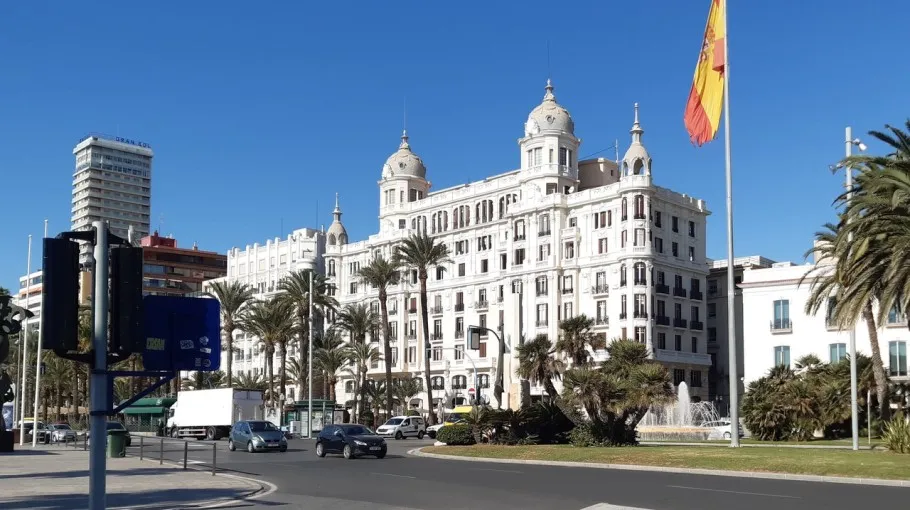
Walking route: cosy, impressive, and unique streets and neighbourhoods of Alicante
As you move from one location to another from the list we’ve suggested, you’ll definitely pass through the cosy streets of Alicante's old town. We recommend taking the time to carefully observe all the buildings. To fully immerse yourself in the charm of this historic city by the Mediterranean coast, we’re sharing with you some fascinating neighbourhoods and walking routes. So, here’s another list of things to do in Alicante city:
1. Barrio de Santa Cruz
This neighbourhood is the historic heart and soul of Alicante. Located on the slopes of Mount Benacantil, it offers breathtaking views of the city, the port, and the Mediterranean Sea. It was the city’s first inhabited district, with settlement beginning in the 8th century under the name Al-Lacant, which later gave rise to the city’s current name. Many tourists visit this area to witness the incredible sunsets.
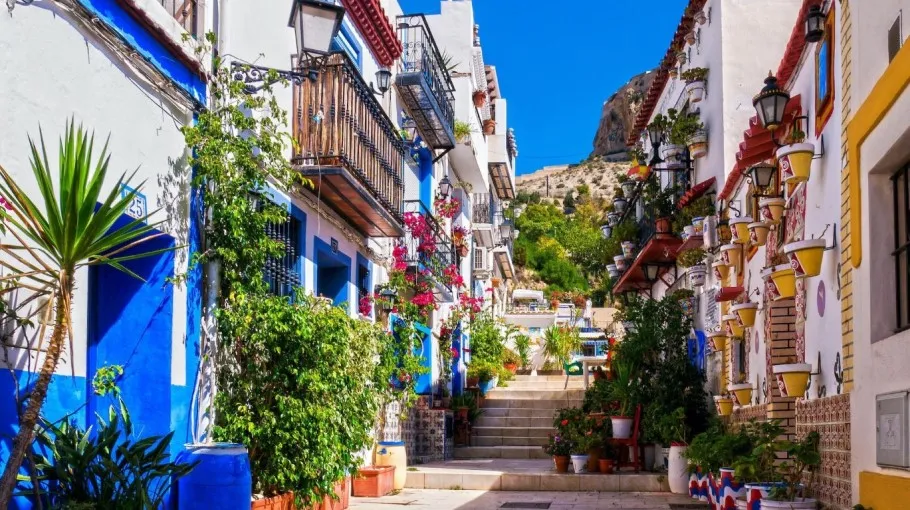
In the Santa Cruz district, narrow winding streets are lined with white houses featuring colourful shutters and flower-filled pots, creating a unique atmosphere. This area has preserved its authenticity, with many houses still belonging to families who have lived here for centuries.
Casita de las Macetas Azules is the most popular house in the area. Here, over 1,000 flowers are planted in blue pots that decorate the house year-round. These flowers contrast with the white façade, reflecting the colours of the Alicante flag: white and blue.
Interesting Fact: In May, Barrio de Santa Cruz is filled with people. Locals and tourists alike flock here to celebrate the annual festival dedicated to the Holy Cross. The streets are decorated with flowers, and the locals organise traditional parades and musical performances.
Barrio de Santa Cruz on Google Maps
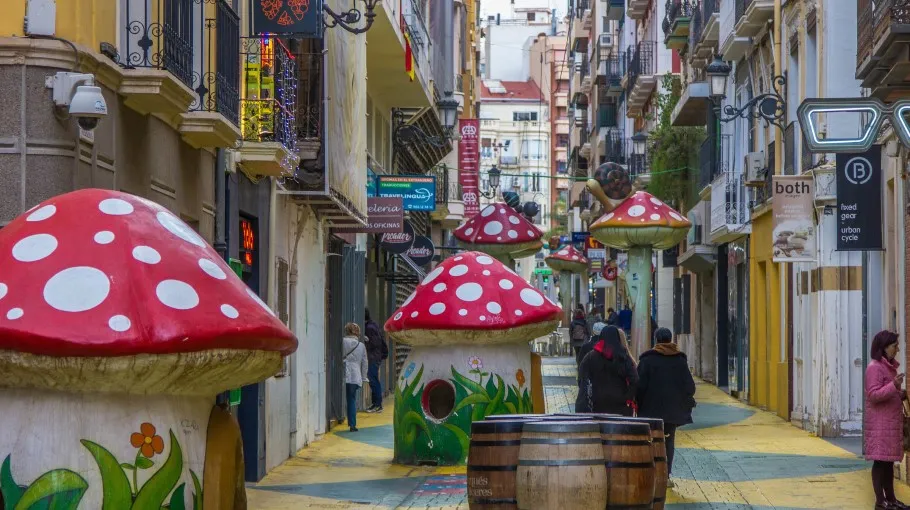
2. Calle de Las Setas (The Mushroom Street)
This street in the centre of Alicante has gained popularity due to its unique metal mushroom-shaped structures, which not only give the street an unusual appearance but also create the sensation of being in a futuristic landscape. These mushrooms can change colours and even appear to "breathe" thanks to special lighting that switches on at different times of the day, adding a magical and mysterious atmosphere.
There are a total of 16 figures, created by Spanish architect and sculptor José Antonio González. The mushroom sculptures were installed on this street in 2017.
Interesting Fact: The mushroom figures are part of Alicante’s urban culture. One mushroom stands over two metres tall, making it the largest of all the figures. It is located in the central part of the street and serves as the main highlight of this artistic installation.
Calle de Las Setas on Google Maps
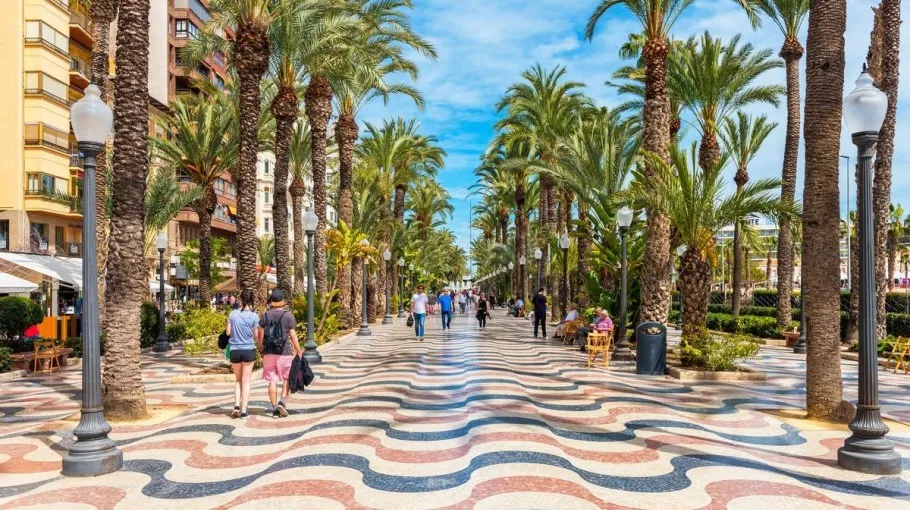
3. Explanada de España
This is one of the most famous and recognisable promenades in Alicante, located along the city's coastal area. Its standout features include numerous palm trees and other types of greenery that provide shade from the scorching summer sun. Additionally, the promenade boasts a mosaic made from three million colourful tiles, forming a wave-like pattern reminiscent of the sea.
The promenade often hosts various cultural events, musical performances, and photoshoots. Artists frequently set up their easels to paint directly on the street. There are also several stalls featuring local artisans' creations and traditional Spanish souvenirs.
Interesting Fact: The Explanada de España stretches approximately 500 metres along the Mediterranean coastline, offering stunning views of the sea and the city. Originally, it was part of an urban development project for Alicante that began in the mid-20th century. The promenade was officially inaugurated in 1958.
Explanada de España on Google Maps
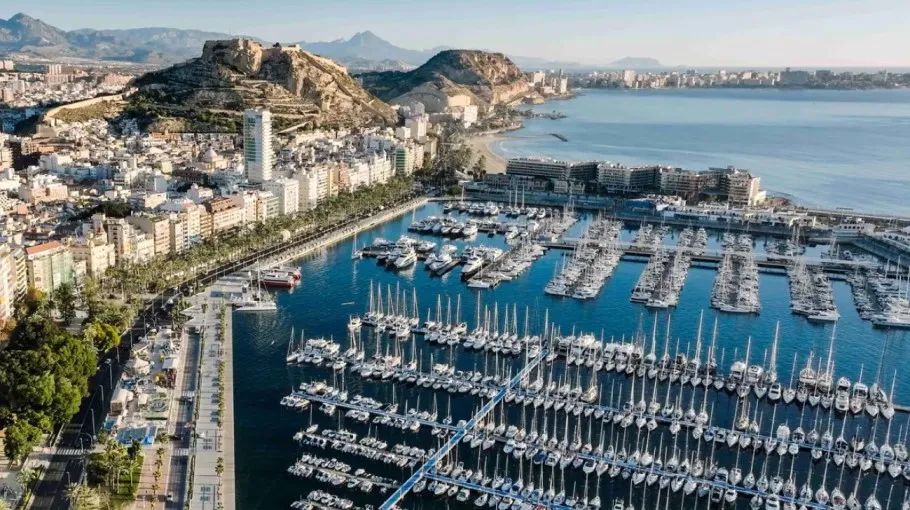
4. Marina Alicante (Port of Alicante)
This is the city’s main port, located along the Mediterranean coast. Its history dates back to ancient Roman times when the area served as a harbour for commercial and military ships. Over the centuries, the Port of Alicante has undergone significant expansion and modernisation, with its current infrastructure established in the mid-20th century. Today, it boasts modern passenger terminals and cargo platforms for trade.
The port is a popular spot for tourists, offering numerous cafés, restaurants, and shops. Visitors can also enjoy boat and yacht tours, making it a vibrant destination for leisure and exploration.
Interesting Fact: The Port of Alicante has a hidden underground section built during the Spanish Civil War in the 1930s. This subterranean system was designed as a shelter to protect critical cargo and people in case of bombings or other threats. Although this part of the port is not open to the public, it stands as a testament to the defensive measures implemented during the war.
Marina Alicante on Google Maps
5. Isla de Tabarca
This is the smallest inhabited island in Spain, located in the Mediterranean Sea, about 8 km off the coast of Alicante. The island has been settled since ancient times and served as a pirate base during the Middle Ages. In the 18th century, under the reign of King Charles III, Tabarca became home to Algerian slaves freed during Spanish naval operations, forming the basis of its modern settlement.
Tabarca is part of a protected marine reserve, known for its diverse marine fauna and flora. Surrounded by crystal-clear waters, it is one of Spain's top spots for snorkelling and diving. The island boasts several historical landmarks, including the Church of Saint Peter, built in 1770, and remnants of the ancient settlement's defensive walls.
Visitors can enjoy numerous cafés, restaurants, artisanal shops, and picturesque courtyards while exploring the island. Boats depart daily from Alicante's port in the morning and return in the evening. A round trip typically costs €20–€35, depending on the season.
Interesting Fact: The island is also known by its old name, Isla Plana (Flat Island), due to its relatively even terrain compared to other islands in the region.
A city where you won’t go hungry: delicious and diverse food, hundreds of unique drinks, and stunning restaurant interiors
Food in Alicante is a true reflection of the richness of Mediterranean cuisine, combining fresh seafood, vegetables, aromatic spices, and olive oil. The local gastronomy features delicious dishes rooted in ancient traditions, reflecting the cultural influences of the various civilisations that have passed through this region.
1. Mercado Central (Central Market of Alicante)
This large market is a true gem of Alicante. Located in the city centre, it offers visitors an extensive selection of fresh products, including meat, fish, vegetables, fruits, and delicacies. The architecture of the building combines traditional style with modernist elements, creating a unique atmosphere. It’s not only a place to shop for goods but also an opportunity to immerse yourself in the local culture and taste authentic dishes.
Interesting fact: The building of Mercado Central was constructed in 1921. Materials for its construction were brought from various parts of Spain. One of the notable features is the use of red brick, which gives the market its distinctive appearance. Additionally, the roof of the market is adorned with decorative modernist elements, making it not only a functional space but also an architectural masterpiece.
Mercado Central on Google Maps
Opening hours: Daily from 07:00 to 14:30
2. Kiosco Peret
This iconic spot in Alicante is located on the famous Explanada de España promenade. A small outdoor bar, it has been a favourite hangout for both locals and tourists for many years. Kiosco Peret is famous for its refreshing drinks, especially the "Agua de Valencia" cocktail, as well as the "Horchata" (a creamy summer drink made from tiger nuts). Here, you can relax and enjoy watching the world go by around you.
Interesting fact: The establishment has been located here for over 90 years, and its name comes from the founder's name. It has become a symbol of social life in Alicante, where people stop to relax, enjoy the sea view, and chat in an informal setting.
Kiosco Peret on Google Maps
Opening hours: Daily from 09:00 AM to 11:00 PM
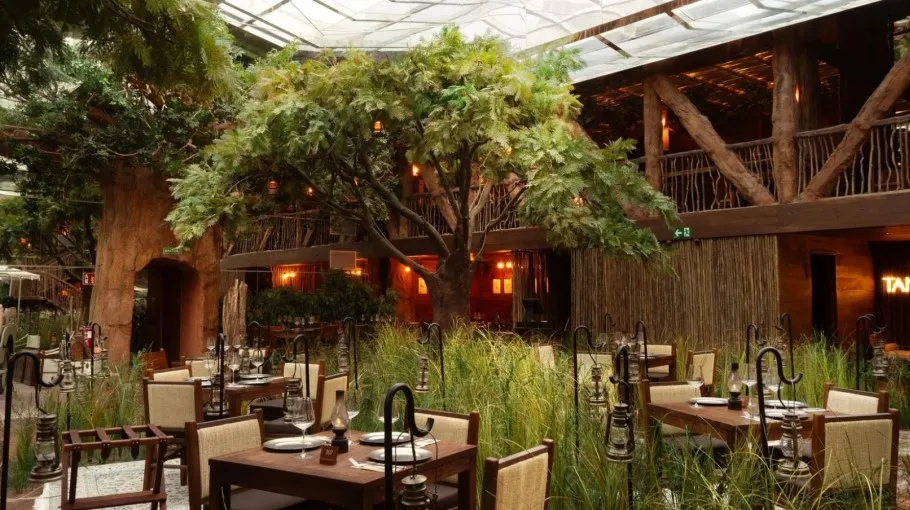
3. Voltereta, Bienvenido a Tanzania
This restaurant in the heart of Alicante offers a unique culinary experience. The interior recreates the atmosphere of the African savannah, particularly the Serengeti National Park, with different areas for guests, such as the peak zone and seating near a fireplace. The menu combines local ingredients with African flavours, allowing guests to enjoy exotic pairings and aromas.
Interesting Fact: This restaurant opened on November 21, 2024, but has already received numerous positive reviews and become a favourite spot for both locals and tourists. Therefore, be sure to book your table in advance.
Voltereta on Google Maps
Opening Hours: 12:30–16:30, then 19:45–23:00
Tips from our team - WTG Spain
- Park in the Port - There are plenty of parking spaces here, and it's a convenient location to easily reach all the major spots and historical sites in Alicante. However, keep in mind that parking near the Castillo de Santa Bárbara requires a bit more effort to find.
- Wear hats and apply sunscreen - Protect yourself from the strong Mediterranean sun!
- Wear comfortable shoes - Your feet will thank you for it after a day of exploring.
- Carry water with you - Stay hydrated, especially in the warm weather.
- Enjoy everything around you! - Take time to appreciate all the beauty Alicante has to offer!
It's just the beginning: entertainment and landmarks near Alicante
Around Alicante, a whole world of entertainment and intriguing places awaits, capable of captivating people of all ages. Picturesque landscapes, fascinating historical landmarks, as well as activities for nature lovers and adrenaline enthusiasts create a unique atmosphere for an unforgettable holiday. You’ll find spots for peaceful walks and relaxation, as well as active adventures that will delight even the youngest travelers. Alicante and its surroundings offer something special for every visitor.
Here are a few more places that WTG Spain recommends you visit in Alicante, showing you what to see in Alicante:
1. Río Safari Elche is an open-air zoo near Alicante, home to more than 100 animal species, including giraffes, tigers, and many others. Visitors can enjoy a safari tour, getting up close to the animals. The park also features a large water park with slides for all ages. In the evenings, spectacular sea lion shows are held.
The official website
Río Safari Elche on Google Maps
Price: €13-20, depending on the day and whether you plan to visit the water park. Book your tickets on the website to pay less.
2. Terra Mítica Theme Park
This popular amusement park is located 40 kilometres from Alicante, in the city of Benidorm. Everything is designed to transport visitors into a world of fun, excitement, and stunning views. The park is divided into themed areas: Egypt, Greece, Rome, Iberia, and the Islands, each reflecting the culture and architecture of its respective region. Terra Mítica offers a wide range of attractions, from extreme roller coasters to interactive shows and family-friendly entertainment. Additionally, there are daily performances featuring acrobatics and theatrical productions.
The official website
Terra Mítica on Google Maps
Price: from 37 euros
3. El Castell de Guadalest
This captivating medieval town is nestled in the mountains, 25 km from the coast. Its main attraction is an ancient castle perched atop a cliff, offering breathtaking views of the valley and a reservoir with striking turquoise water. Guadalest is also known for its narrow streets, museums, and unique atmosphere that transports visitors back in time. According to official data, only 274 people live here. The town is always welcoming to tourists.
El Castell de Guadalest on Google Maps
Cost: Entry to the area is free. Inside, there are various museums you can visit if you wish. The average ticket price is €6 for adults and €3 for children. There is also a paid car park nearby, costing €2.
4. Fonts de l'Algar
This natural oasis near Alicante features crystal-clear waterfalls and lagoons that attract visitors with their picturesque beauty. It’s the perfect spot to unwind on a hot day, where you can swim in cool waters or enjoy walks surrounded by lush nature. There is also an eco-trail that provides insights into the local flora and fauna.
The official website
Fonts de l'Algar on Google Maps
Cost: €5 for adults and €4 for children. Nearby, there are paid parking facilities, starting from €5.
5. Benidorm Palace
This iconic entertainment venue in Benidorm is renowned for its spectacular shows and live performances. Opened in 1977, it has become a symbol of luxury and sophistication in the entertainment world of the Costa Blanca. Each year, Benidorm Palace presents new productions that blend dazzling costumes, modern technology, choreography, and music, creating a unique atmosphere. The venue is also famous for its restaurant, where guests can enjoy delicious meals during the show. It’s the perfect spot for an evening out.
The official website
Benidorm Palace on Google Maps
Cost: Starting from €35.

We hope we've carefully selected for you Alicante things to see that you'll definitely want to visit!
Many visitors who fall for the old town and the castle end up looking at property in Alicante before they leave - the same walkable streets and sea views that make the city good for a weekend also make it a strong base to live in year-round.