Driving in Spain as a Foreigner: Insurance, Documents, and Local Laws
What’s on this page?
- Essential Documents for Driving in Spain
- Mandatory Safety Equipment in Vehicles
- Understanding Speed Limits Across Spain
- Insurance Requirements for Foreign Drivers
- Road Rules and Etiquette
- Renting a Vehicle in Spain
- Post-Brexit Considerations for UK Drivers
- Tips for a Safe Driving Experience
- Useful Resources and Contacts
- Interesting facts about driving in Spain
Driving in Spain can be a wonderful way to explore the country’s scenic coastlines, historic towns, and rural landscapes. However, before setting off, it is essential to familiarise yourself with local regulations, the requirements for foreign drivers, the insurance system, and the necessary documentation. Spanish law includes a number of specific provisions that all road users must follow, including tourists and temporary residents.
For citizens of other countries - including those from the EU, the USA, the UK, or Ukraine - it is important to understand whether their driving licence for Spain is recognised, whether an international driving licence Spain is required, and what driving in Spain requirements apply in terms of vehicle registration, insurance, and roadworthiness. Observing the Spain traffic rules is also crucial, as they may differ from the laws in the driver's home country.
This is especially relevant if you already own - or are planning to buy - property in Spain, since regular trips to the coast usually mean regular time behind the wheel.

Essential Documents for Driving in Spain
To ensure that driving in Spain is legal, a foreign driver must carry a specific set of documents. This is not merely a formality - the absence of even one of these items can result in significant fines or even a driving ban. Whether you are visiting as a tourist, staying temporarily, or residing in the country long-term, these documents are mandatory.
First and foremost, you need a valid driving licence for Spain. If you are a citizen of a European Union or European Economic Area country, your national licence is recognised without the need for additional permits. However, drivers from other countries — such as the USA, Canada, Australia, Ukraine, or the UK - may require an international driving licence Spain. This is one of the key documents proving your legal status as a driver abroad.
It is important to remember that driving in Spain as an American requires both an International Driving Permit (IDP) and a valid national driving licence. In addition, to fully meet the driving requirements for Spain, you must also carry your vehicle registration document, valid insurance, and proof of having passed a roadworthiness inspection.
Valid Driving Licence Requirements
For driving in Spain as a foreigner, the main requirement is holding a valid driving licence. However, the acceptance of this licence depends on the country that issued it. Ensuring that your licence meets Spanish standards is crucial for avoiding fines and potential issues on the road.
Citizens of European Union (EU) countries, the European Economic Area (EEA), or Switzerland can use their national driving licences freely, without needing to complete additional procedures. These documents are legally recognised by Spain, provided they remain valid for the entire duration of the person’s stay.
For citizens of non-EU or non-EEA countries, the situation is more complex. For example, driving in Spain as an American, or indeed as a Ukrainian, requires an international driving licence Spain. The International Driving Permit (IDP) does not replace a national licence; rather, it serves as a translation in accordance with international standards. Therefore, both documents - the national licence and the IDP - must be carried while driving.
If you plan to stay in Spain long-term or become a resident, your foreign licence may lose its validity after a certain period. In that case, you will be required to exchange it for a local one, in line with the driving licence requirements for Spain.
International Driving Permit (IDP)
If you are not an EU citizen, then for driving in Spain, you will most likely need an international driving licence Spain. This applies to drivers from the USA, the UK, Canada, Ukraine, Australia, and many other non-EU countries. It’s important to understand that the International Driving Permit (IDP) is not a stand-alone document — it is only valid when presented alongside your national driving licence.
The international driving licence Spain serves as an official translation of your home country’s licence, in accordance with the provisions of the Vienna or Geneva Convention. Having an IDP significantly facilitates interactions with local police and insurance companies. For instance, when driving in Spain as an American, the IDP allows you to easily demonstrate your eligibility to drive and helps avoid legal complications.
This document must be obtained in your home country before travelling, typically through automobile clubs or road associations. It is valid for one year and cannot be renewed. If you plan to stay in Spain longer, you will need to apply to exchange your licence in accordance with local driving in Spain requirements.
Note that even with an IDP, in certain cases, a police officer may ask for a translation of your original licence if the IDP is not issued according to the correct standards. This is why it is crucial to obtain your IDP only through officially authorised organisations.
Vehicle Registration and Insurance Proof
In addition to holding a valid driving licence for Spain, every driver - regardless of nationality - must carry documentation proving the legal use of the vehicle. This is one of the core elements of the driving in Spain requirements, and compliance is strictly enforced.
First and foremost, you must have the original or a copy of the vehicle registration certificate. This document must be valid and contain accurate information about the owner, number plates, and the vehicle’s technical specifications. It confirms that the car is not stolen, subject to restrictions, or otherwise unfit for use on Spanish roads.
The second essential document is your insurance policy. If you are using your own car, the insurance must cover at least third-party liability. If you are travelling in a vehicle registered in another country, you must ensure that your insurance is valid in Spain. This is often confirmed by presenting a Green Card - an international certificate of insurance.
You must also have a certificate of roadworthiness (inspection), which confirms that your vehicle is technically sound and meets environmental standards. In the case of driving in Spain as a tourist using a rental car, all of this documentation should be provided by the rental company. Don’t hesitate to check the paperwork carefully before signing the rental agreement.
Mandatory Safety Equipment in Vehicles
Another important aspect of driving in Spain is the mandatory safety equipment that every vehicle must carry. According to Spain traffic rules, failure to have even one of the required items can result in a significant fine or temporary driving restrictions. This applies to local drivers as well as tourists and foreign visitors, whether they are renting a car or travelling in their own vehicle.
Required Items to Carry
Every car in Spain must be equipped with a specific set of items mandated by law. These include:
- A high-visibility vest — which must be worn when exiting the vehicle onto the carriageway or roadside. It is the primary safety measure to ensure the driver is visible in an emergency.
- A warning triangle — used to signal a breakdown or accident. From 2026, there are plans to gradually transition to electronic beacons.
- A spare wheel or tyre repair kit — allowing minor repairs to be made without needing to call for a tow truck.
- A basic tool kit — including a wrench, jack, and other necessary equipment.
In some regions, a fire extinguisher or first aid kit may also be required, so it’s advisable to check local regulations before travelling.
Having all these items not only complies with the country’s laws but can also save lives in the event of an emergency.
Penalties for Non-Compliance
The absence of even one mandatory item - such as a high-visibility vest - can result in a fine ranging from €80 to €200. If the violation is deemed serious or poses a risk to the safety of other road users, the police may impose a temporary driving ban on the vehicle. This is in line with the new driving laws in Spain, which have come into effect in recent years and apply to foreign drivers as well.
When driving in Spain as a tourist in a rental vehicle, the full safety kit should be provided by the rental company. However, the driver is still legally responsible for ensuring that all required items are present - so it's important to check everything before setting off.
Current fines for traffic violations in Spain (2025):
|
Violation |
Penalty (€) |
Additional Consequences |
|
Speeding by 1–20 km/h |
100 € |
No points deduction |
|
+21–30 km/h |
300 € |
−2 points |
|
+31–40 km/h |
400 € |
−4 points |
|
+41–70 km/h |
500 € |
−6 points |
|
Over +70 km/h |
600 € |
−6 points, possible criminal liability |
|
Talking on the phone without hands-free |
200 € |
−6 points |
|
Driving without a seat belt |
200 € |
−3 points |
|
Throwing cigarette butts or trash out of cars |
up to 500 € |
−6 points (if it poses a fire hazard) |
|
No reflective vest or emergency triangle |
200 € |
— |
|
Parking in a disabled area without a permit |
up to 200 € |
— |
|
Driving without insurance |
1 500–3 000 € |
This may cause the car to be towed. |
|
Alcohol: 0.5–0.6‰ (0.3 for beginners and professionals) |
up to 500 € |
−4–6 points |
|
Alcohol: over 0.6‰ or refusal to take the test |
up to 1 000 € |
Criminal liability |
|
Incomplete stop at STOP sign (radar fixation) |
200 € |
−4 points |
Understanding Speed Limits Across Spain
Being aware of the current speed limits in Spain is essential for every driver, especially foreigners. Spain operates a well-defined system of speed limits, governed not only by national legislation but also by road signs, which may alter the limits depending on the region, weather conditions, or type of vehicle.
Speeding is one of the most common reasons for fines, so drivers unfamiliar with local rules should pay particular attention. This applies both to driving in Spain as a tourist and to those undertaking longer journeys by car.

Motorways and Dual Carriageways
On motorways (autopistas), marked with the prefix “AP”, the maximum permitted speed is 120 km/h. On two-way roads outside built-up areas, the limit is 100 km/h. In poor weather conditions - such as rain, fog, or ice - or in cases of reduced visibility, these limits may be lowered in accordance with instructions shown on electronic boards or temporary road signs.
It’s important to note that motorways are monitored by a video surveillance system, so exceeding the speed limit by even a few kilometres per hour can be automatically recorded.
Urban and Residential Areas
Within city limits, the general speed limit is set at 50 km/h. In residential areas, on streets with one lane in each direction, or where there is heavy pedestrian activity, the limit is reduced to 20–30 km/h. Drivers must pay close attention to road signs, which are often posted at each block and may vary depending on the district, type of development, or proximity to schools and hospitals.
Narrow streets frequently feature special restriction signs - for example, “Zona 30”, where only reduced-speed travel is permitted. This is part of the updated Spain driving rules for tourists, aimed at making urban streets safer for pedestrians and cyclists.
Special Conditions and Vehicle Types
Different categories of vehicles are subject to specific speed limits:
- Buses and vehicles with trailers: up to 90 km/h on motorways.
- Motorcycles and standard passenger cars: the usual 120 km/h, unless otherwise indicated.
- Vehicles transporting hazardous materials: maximum of 80 km/h.
These limits may be further reduced in cases of adverse weather conditions or when driving in Spain after Brexit as a tourist in vehicles with foreign registration.
Insurance Requirements for Foreign Drivers
Anyone planning on driving in Spain must be aware that having valid insurance cover is a legal requirement under Spanish law. This applies to drivers travelling in their own vehicle as well as those renting a car from local companies.
Having insurance not only meets the driving in Spain requirements, but also serves as essential financial protection in the event of an accident, property damage, or harm caused to third parties.
Types of Insurance Coverage
At a minimum, you must have third-party liability insurance (Responsabilidad Civil), which covers damage caused to others. This is mandatory under Spanish laws and will be checked by the police in the event of an incident or routine stop.
However, for driving in Spain as a tourist or during extended trips, it is advisable to obtain comprehensive insurance, which covers:
- damage to your own vehicle caused by the driver;
- theft or vandalism;
- fire or natural disasters.
If you are renting a car, insurance is usually included in the price - but only basic cover. It is recommended to purchase additional protection (such as full protection or zero-excess cover) to avoid significant expenses in case of vehicle damage.
Duration of Validity for Foreign Vehicles
Foreign tourists travelling in their own vehicle from outside the EU must ensure that their insurance policy is valid in Spain. This is most commonly confirmed by possession of a Green Card - an international insurance certificate. It must cover the entire duration of the stay in the country.
In most cases, foreign insurance policies are recognised for up to 6 months. If your stay in Spain exceeds this period, you are required to arrange local insurance. This is especially important for drivers who are permanently residing in Spain or plan to import their vehicle - in accordance with the driving licence requirements for Spain.
Important: Without valid insurance, a vehicle is not even allowed to be parked on the street - it may be towed away or result in a fine.
Road Rules and Etiquette
Spain has clearly regulated traffic rules that apply to all drivers without exception. Ignorance of the law is not an excuse, so before getting behind the wheel, every foreign driver should familiarize themselves with the main rules and expected road behavior. This is essential both for your safety and to avoid fines.
In addition to technical regulations, road etiquette in Spain is highly valued. This includes:
- Polite driving;
- Respect for pedestrians and cyclists;
- Proper use of turn signals and lights.
Following both formal rules and informal customs helps ensure a smooth and safe driving experience on Spanish roads.
Driving on the Right Side
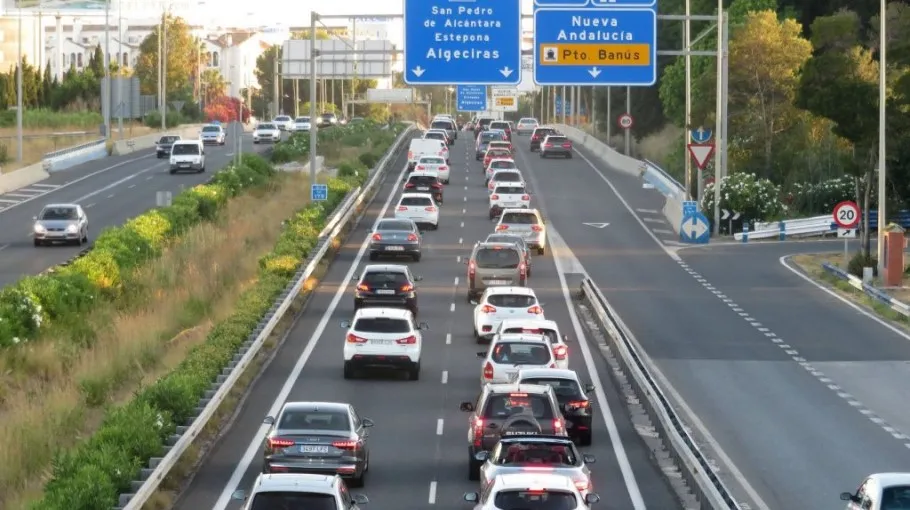
Spain is a right-hand driving country, meaning the Spain driving side is the right. Vehicles drive on the right-hand lane, and overtaking is done on the left. This system is standard across most European countries but may feel unfamiliar to tourists from the UK, Australia, or Cyprus, where driving is on the left.
On motorways (autopistas), it is prohibited to stay in the left lane unless overtaking. Once the overtaking maneuver is complete, the driver must return to the right lane. Failure to comply with this rule is considered a traffic violation and may result in a fine.
Use of Mobile Phones and Seat Belts
Driving in Spain rules strictly prohibit the use of mobile phones while driving unless the device is connected via a hands-free system. Even holding a phone in your hand is grounds for a fine of up to €200 and the deduction of points from your driving record (for local licence holders).
Seat belts are also mandatory - not only for the driver but for all passengers, both in the front and rear seats. Failure to comply with this rule is considered a serious offence and can result in additional penalties.
Alcohol Limits and Testing
The legal blood alcohol limit for most drivers in Spain is 0.5‰ (promille). However, for novice drivers with less than two years of experience, the limit is reduced to 0.3‰. Professional drivers are also subject to the lower threshold.
Police have the right to stop any vehicle at any time to carry out a test for alcohol or drugs. If the allowed limits are exceeded, penalties may include fines, temporary driving bans, or - in severe cases - criminal charges.
Given these strict regulations, foreign drivers are strongly advised to avoid any alcohol consumption before driving, as even a small amount can lead to legal complications.
Renting a Vehicle in Spain
For many travelers, renting a car in Spain is the ideal way to explore the country freely - from charming villages to scenic coastlines and national parks. However, just like with private vehicles, rental cars are subject to the same driving in Spain requirements. They must meet all safety standards and carry valid insurance coverage.
Documentation Needed
To rent a car, you must provide:
- Passport or another identification document;
- Valid national driving licence (preferably in Latin script);
- International Driving Permit (IDP) for Spain - mandatory if your licence is not recognized by the EU or issued in a non-European language;
- Credit card in the main driver's name - required for payment and deposit;
- Sometimes - booking confirmation.
Rental companies usually require the driver to have at least 1-2 years of driving experience. Carefully check the conditions to avoid being refused service.
Age Restrictions and Additional Fees
Most companies rent cars to drivers aged 21 and over, but for some models, the minimum age is 25. If you are under 25, you will likely have to pay an additional "young driver fee," which ranges from 5 to 25 euros per day.
There is usually no maximum age limit for renters, but some companies may impose extra requirements for those over 70, such as medical certificates or proof of driving experience.
Insurance and Deposit Requirements
Rental cars must be insured at least for civil liability. Basic insurance is usually included in the rental price, but it often has a deductible - an amount you pay in case of damage to the car. To avoid extra costs, companies offer additional coverage options:
- Super CDW (full coverage without deductible),
- Coverage against theft and damage to tires, windshields, and mirrors.
Additionally, renters are often required to leave a cash deposit - an amount blocked on the credit card and released after returning the car without damage. For expensive vehicles, this deposit can reach 1000-1500 euros.
Post-Brexit Considerations for UK Drivers
Since the United Kingdom left the European Union in 2020, the rules governing driving in Spain after Brexit as a tourist have changed. British drivers no longer have automatic recognition of their licenses in Spain - especially in cases of long-term stays or moving for permanent residence.
These new conditions apply both to drivers traveling in their own vehicles and to those renting cars within Spain.
Changes in Licence Recognition
Before Brexit, UK driving licences valid in Spain were recognized just like those of EU citizens. However, they no longer have this automatic status.
For tourists staying in the country for less than 90 days, UK driving licences remain valid without additional requirements — you can use them as before. However, in many cases, it is recommended to have an international driving licence for Spain as a supplementary document, especially to simplify interactions with the police and insurance companies.
IDP Requirements and Validity
If a UK citizen resides in Spain for more than 6 months (either permanently or temporarily), they must either:
- exchange their UK driving licence for a Spanish one,
- or apply to the UK authorities for an international driving licence that allows them to legally drive in Spain.
After 6 months, UK driving licences are no longer recognized unless exchanged for local ones. This requirement is part of the updated driving licence requirements for Spain.
It’s worth noting that licence exchanges are currently regulated by bilateral agreements between Spain and the UK. Up-to-date information can be found on the official websites gov.uk or the DGT - the Spanish Directorate General of Traffic.
Tips for a Safe Driving Experience
Even with all the necessary documents, insurance, and adherence to Spain’s traffic rules, every driver should be prepared for various situations on the road. Spain is a large and diverse country, featuring mountain passes, coastal highways, toll roads, and busy city streets. Below are key tips to help make your trip safer, more comfortable, and free from unpleasant surprises.
Navigating Toll Roads
Many of the main highways in Spain are toll roads marked with the prefix AP (Autopista de Peaje). The cost depends on the distance, vehicle type, and region. Some routes still use manual payment booths where you can pay with cash or a bank card. Others are automated (free flow) and read your vehicle’s license plate.
When driving in Spain as a tourist, it’s best to check in advance whether toll costs are included in your car rental (sometimes rental companies provide VIA-T devices for automatic payment). If you’re traveling in your own vehicle, make sure you have a valid payment method, especially for roads without toll booths.
Dealing with Accidents and Emergencies
In case of an accident or breakdown, there is a clear procedure to follow:
- Stop the vehicle in a safe place and turn on the hazard lights.
- Put on a reflective vest before exiting the vehicle.
- Place a warning triangle (if available).
- Call 112 — the universal emergency number across all EU countries.
- If there are injured people, do not move them unless necessary - wait for emergency services to arrive.
- Notify your insurance company, take photos, gather witness contacts, and contact the police if needed.
It’s always helpful to carry copies of your documents and your insurance representative’s contact information - this simplifies handling the situation.
Contacting Roadside Assistance
Many drivers — especially when driving in Spain as an American or for Brits after Brexit - use services from automobile associations such as RACE (Spain), Green Flag, AA, or ADAC. If you’re a member of a motoring association in your home country, check whether it has partnerships with Spanish roadside assistance providers.
In case of a breakdown, assistance services can:
- Tow the vehicle to a repair center;
- Provide on-the-spot repairs if possible;
- Help arrange hotel accommodation or alternative transport.
This is particularly useful on long journeys or when traveling with family.
Useful Resources and Contacts
When traveling across Spain - especially by car - it’s essential to keep reliable sources of information and emergency contacts within easy reach. This applies not only in cases of accidents or breakdowns but also for administrative issues such as losing your documents,
needing to contact your embassy, or checking the latest driving laws in Spain.
Staying informed and prepared helps ensure a smoother, safer journey throughout the country.
Emergency Numbers
- 112 - the universal European emergency number for calling the police, ambulance, or fire services. It’s free, works from any phone (even without a SIM card), and is available throughout Spain.
- 060 - the Spanish Government’s information helpline, where you can get guidance on administrative procedures, such as vehicle registration, driver’s licence exchange, and more.
- DGT (Dirección General de Tráfico) - Spain’s main traffic authority, responsible for all traffic regulations. Their official website offers up-to-date traffic news, road conditions, regulations, and useful resources for all drivers in Spain.
Automobile Associations and Embassies
In case of a technical breakdown or the need for legal advice, automobile associations can assist you:
- RACE (Real Automóvil Club de España) - the national roadside assistance service, operating 24/7.
- ADAC (Germany), AA (United Kingdom), Green Flag - have partnership programs with Spanish services.
- The European network EuroRAP publishes data on safe and dangerous road sections.
Also, keep the contact details of your country’s embassy or consulate in Spain. They can help in case of lost documents, arrest, serious accidents, or medical emergencies.
Interesting facts about driving in Spain
- Spain is one of the countries with the most developed motorway network in Europe. The total length of toll roads exceeds 3,000 km.
- In many cities, parking is color-coded: blue zones are paid, white zones are free, and yellow zones are no-parking areas.
- On toll roads (AP), you may sometimes encounter automatic payment without barriers. If you pass without paying, a camera will record the violation, and the fine will be sent to the rental company’s address.
- The STOP sign in Spain is the only traffic sign that is not translated. It is always written in English, even in Catalan or Basque regions.
- Spanish drivers highly respect pedestrians but can be impatient with hesitant drivers at intersections or roundabouts.
- Speed cameras are common even on secondary roads. The country has an automatic fine enforcement system.
Following the driving in Spain requirements, paying attention to speed limits in Spain, having a valid international driving licence Spain, and basic respect for local laws are key factors to make your trip safe, enjoyable, and legal.
Whether you plan a short holiday or a trip with your own car from another country, proper preparation for driving in Spain will help you avoid difficulties and enjoy every kilometer of your journey.